

Utility Department
Overview
Our Mission: To serve our customers by providing safe, reliable drinking water and environmentally responsible wastewater treatment at affordable rates while emphasizing customer service and protecting our environment.
Online Services & Tools
Pay your water bill online and set up your account for AutoPay.
Pay Water Bill Online
Get Boil Water Notice Alerts through the Alert St. Johns Emergency Network or call the Boil Water Notice Hotline at (904) 209-2731.
Boil Water Notices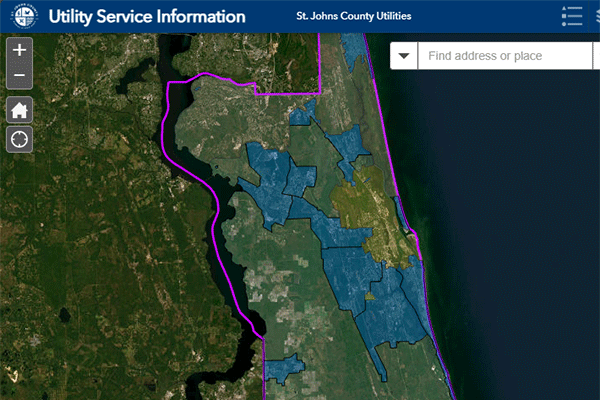
Helpful and time saving maps & apps such as construction projects, events and services.
View Maps and AppsAnnouncements
Drought Conditions Persist Across St. Johns County Despite Recent Rainfall
The St. Johns River Water Management District’s (SJRWMD) Phase III Extreme Water Shortage Order remains in effect despite recent rainfall across St. Johns County. Drought conditions continue to affect water resources across a large portion of Northeast and North-Central Florida.
Although St. Johns County has experienced periodic afternoon thunderstorms and localized rainfall, many neighboring areas within the water management district continue to face significant rainfall deficits. At the end of July, St. Johns County’s rainfall was approximately 8.3 inches below its 12-month average, while some neighboring counties, including Baker County, recorded deficits of more than 22 inches.
$191.8 million utility protects water resources and expands reclaimed water capacity
The State Road 207 Water Reclamation Facility officially came online on May 11, 2026, marking a major milestone in the St. Johns County Utility Department’s long-term commitment to water conservation and environmental stewardship. The $191.8 million project, the largest capital improvement project in St. Johns County history, includes the State Road 207 Water Reclamation Facility, multiple pump stations, and approximately 15 miles of wastewater and reclaimed water pipelines. Funded through the St. Johns County Utility Department’s enterprise fund, the project is supported by utility revenues rather than property taxes. The facility is now serving residents by treating wastewater and producing reclaimed water for irrigation, helping conserve valuable drinking water supplies.
St. Johns County Completes $1.6 Million Capital Improvement Project at Plantation Water Treatment Plant
The St. Johns County Utility Department recently completed a $1,624,350 capital improvement project at the Plantation Water Treatment Plant in Ponte Vedra Beach, enhancing the reliability and resiliency of the drinking water system for years to come.
St. Johns County Utility Department Earns High Moody’s Rating, Reflecting Strong Financial Management
Moody’s upgraded the County’s existing water and sewer revenue bonds to Aa1 and assigned the same rating to bonds issued in 2026, with a stable outlook. The rating places the St. Johns County Utility Department among the highest-rated utility systems in the region. The Utility Department also maintains an AAA rating with S & P Global.

Utility Department
2025 Annual Report
Great Water
Great Community
Popular Links
FAQs

Choose one of the following options for paying your water & sewer bill:
- Pay your bill online
- Sign up for AutoPay Online via your credit card or bank account
- Pay by Phone call 1-844-752-8845
- Mail a check with your Utility bill
View the Current Utility Services Rates.
Contact Customer Service at (904) 209-2700, Option 4, Monday through Friday, 7:30 am to 4:30 pm.
To report problems such as leaks, no water, low water pressure or liftstation alarms, please call (904) 209-2700 during regular business hours of 7:30 AM to 4:30 PM, Monday through Friday. Please call (904) 209-2745 after hours, on weekends or on holidays.
Contact Department
Neal Shinkre Director
Email: utilbill@sjcfl.us
Main Phone: (904) 209-2700
Toll Free: 1 (877) 837-2311
After Hours Emergency: (904) 209-2745
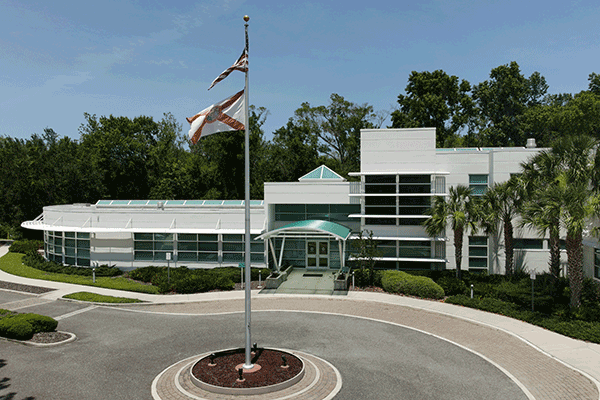
1205 Florida 16St. Augustine, FL 32084 HOURS
Monday - Friday: 7:30am-4:30pm
